

What actually makes a profitable photography business? It’s not just what you charge. It’s the whole stack of decisions underneath the pricing: what you offer, what you outsource, what you own, and what you’re willing to say no to along the way. This best-of episode pulls five conversations from the TMA archive to answer that question from five different angles, and the picture they paint together is more than any single episode could deliver on its own.

Simplify First, Then Grow
TMA mentor Laura Esmond built her Get Rooted framework on a simple belief: simplification is the fastest path to profitability, not the reward you get after you’ve already made it. Her own pivot came from a season of asking hard questions about what her family needed and what she actually wanted her days to look like, questions she admits she hadn’t asked herself in years. The business she landed on looked nothing like the one she started with, and it worked better because of it.
Laura’s advice for photographers who feel like their business has gotten complicated starts with something she calls a “let go list.” She described it this way: “I press pause. Let’s stop for a second. It’s like if somebody was riding a bike down a hill, just out of control, it’d be like, hold on, just stop riding your bike. Let’s think this through a little bit.” From there, she walks photographers through their whole client process and asks what actually serves them, what serves the client, and what serves the goal, then gives permission to let go of anything that doesn’t.
Jodi Nemetz took a different route to the same destination: niching down. With two master’s degrees in psychology and a photography business that was earning $41,000 a year, Jodi attended a workshop where one offhand comment about keeping clients moving during a shoot rewired how she thought about posing entirely. She built what became her posing method around basic brain chemistry, replacing rigid, traditional posing guides with a system designed to calm clients instead of triggering their stress response. Within five years of focusing on that one differentiator, her business grew from $41,000 to multiple six figures.
Know What to Outsource, and What Vision Is Really For
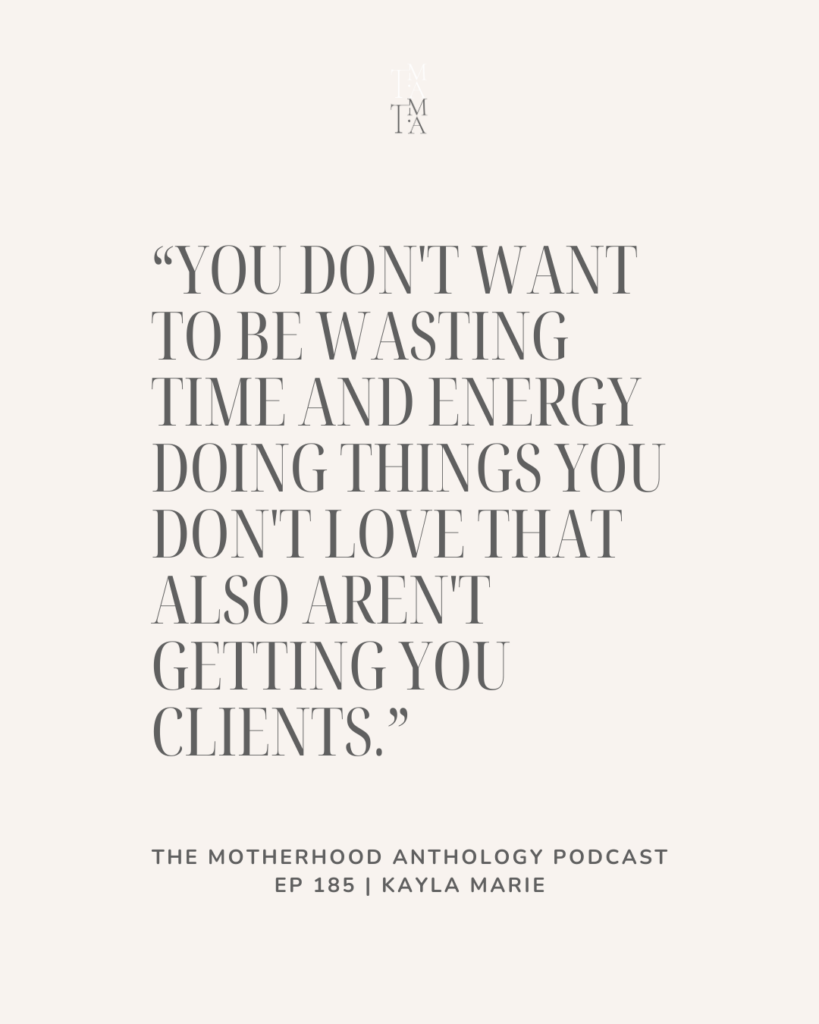
Kayla Marie’s business moved with her from Traverse City to Dallas, two markets that could not behave more differently. That move forced her to get honest about what was actually driving bookings versus what just felt productive. Her advice is to take an honest look at where your qualified leads are actually coming from, then invest your time and money there. For Kayla, that meant outsourcing an SEO audit while keeping social media in-house, because she genuinely enjoys it and it plays to her strengths. Her bigger point is that outsourcing decisions should follow the numbers, not your guilt about what you think you should be doing.
Shannon Griffin’s conversation took a different shape entirely. She read her artist statement out loud, one built around the idea of noticing what others have overlooked, and connected it directly to how she books high-value clients. “My promise with each woman I photographed is that I’m going to bring them into the light,” she said. “There is no more hiding.” That statement is not a mission-page formality for Shannon. It’s the reason she is willing to ask for far more than she thinks she’ll get. Vision, in her telling, is a profit driver, not a creative luxury.
Boundaries Are What Make It Sustainable
TMA mentor Katie Lamb closed out this episode with the piece that ties the other four together: boundaries. After sixteen years in business, she’s landed on a reframe that changes how a lot of photographers think about saying no. “Every time you say yes, you are inadvertently saying no to something else,” she said. “Choose wisely.” For Katie, a yes-heavy business isn’t a generous one. It’s an unsustainable one, and she walks through the real reasons photographers struggle here, from perfectionism and scope creep to plain old FOMO.
This is where a business becomes a business you can actually stay in. Laura’s simplification, Jodi’s niche, Kayla’s outsourcing framework, and Shannon’s vision only hold up long-term if there are boundaries underneath them. That’s also where community matters. Every one of this episode’s five voices, whether mentor or member, is connected through TMA, and that connection is intentional. Profitability rarely gets built in isolation. It gets built through mentors who’ve already solved the problem you’re facing and a room full of people working through the same questions you are.
Listen and Learn More
Profitability is built from the ground up, through what you simplify, what you’re known for, what you hand off, and what you protect. This episode is worth a listen if you want to hear all five conversations in the guests’ own words.
If any of these conversations resonated, you can go back and read the full breakdown on their blog posts here:
How to Simplify Your Photography Business | EP 117 with Laura Esmond
The Psychology Behind Profitable Portrait Photography | EP 130 with Jodi Nemetz
How to Know Your Brand and Outsource the Rest | EP 147 with Kayla Marie
Turn Your Vision to Profit with a Clear Photography Business Mindset | EP 163 with Shannon Griffin
How to Set Boundaries in Your Photography Business | EP 98 with Katie Lamb
Ready to build a business that reflects your own creative voice? The Motherhood Anthology membership gives you access to expert mentors, live coaching, monthly marketing suites, and a private community of photographers who are invested in your success. Learn more and join at themotherhoodanthology.com.

The Motherhood Anthology is a community and educational resource for photographers who want a profitable and sustainable business they love. With 15+ expert mentors and 7+ years of proven content, TMA helps portrait photographers build confident, thriving businesses through monthly education, mentorship, and a supportive community of 700+ members.